
Australia Enters New Defence Era as Admiral Mark Hammond Assumes Command of the ADF
Credit:
Photo: Kym Smith / Department of Defence
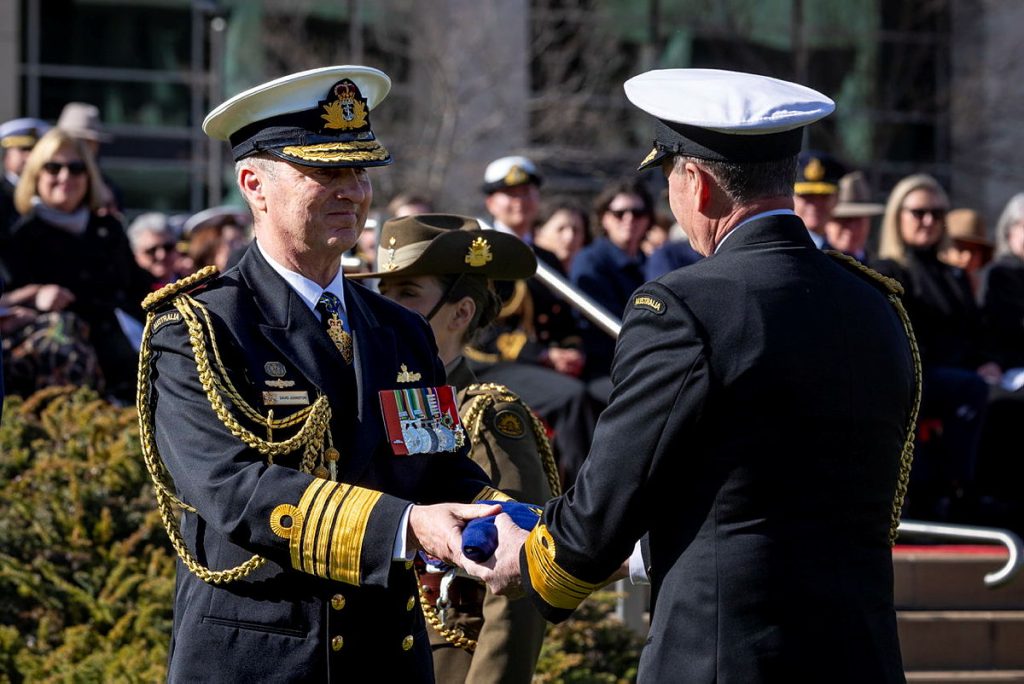
Australia has entered a new chapter in its national defence posture, with Admiral Mark Hammond officially assuming command as Chief of the Australian Defence Force (CDF), succeeding Admiral David Johnson following a ceremonial Change of Command Parade at Sir Thomas Blamey Square in Canberra.
The ceremony, attended by the Governor-General, senior Defence leaders, international military representatives, veterans’ organisations and serving personnel, marked the formal transfer of responsibility for Australia’s armed forces during one of the most strategically challenging periods in decades.
Admiral Hammond’s appointment completes a broader leadership transition announced by the Australian Government in April, which also includes Lieutenant General Susan Coyle becoming Australia’s first female Chief of Army and Vice Admiral Matthew Buckley taking command of the Royal Australian Navy.
Farewell to a Chief Who Oversaw Strategic Transformation
Retiring after almost five decades of military service, Admiral David Johnson reflected on a career that culminated in leading the ADF through an era defined by accelerating geopolitical competition and the implementation of Australia’s National Defence Strategy.
In his farewell address, Johnson said his objective had been to leave the Defence Force stronger than he found it, outlining four priorities that shaped his tenure:
- Building a larger and more capable fighting force;
- Strengthening recruitment and retention;
- Creating a high-performing and inclusive workforce; and
- Improving Defence’s ability to rapidly deliver military capability.
He argued significant progress had been made across all four areas, describing today’s ADF as “a larger, more capable, stronger force” while acknowledging that military modernisation is a continuous process rather than one with a defined endpoint.
Johnson also praised his successor, highlighting Hammond’s operational experience, leadership of the Navy and deep commitment to Defence personnel.
Hammond Signals Readiness for a More Dangerous World
Credit:
Photo: Nicole Mankowski / Department of Defence
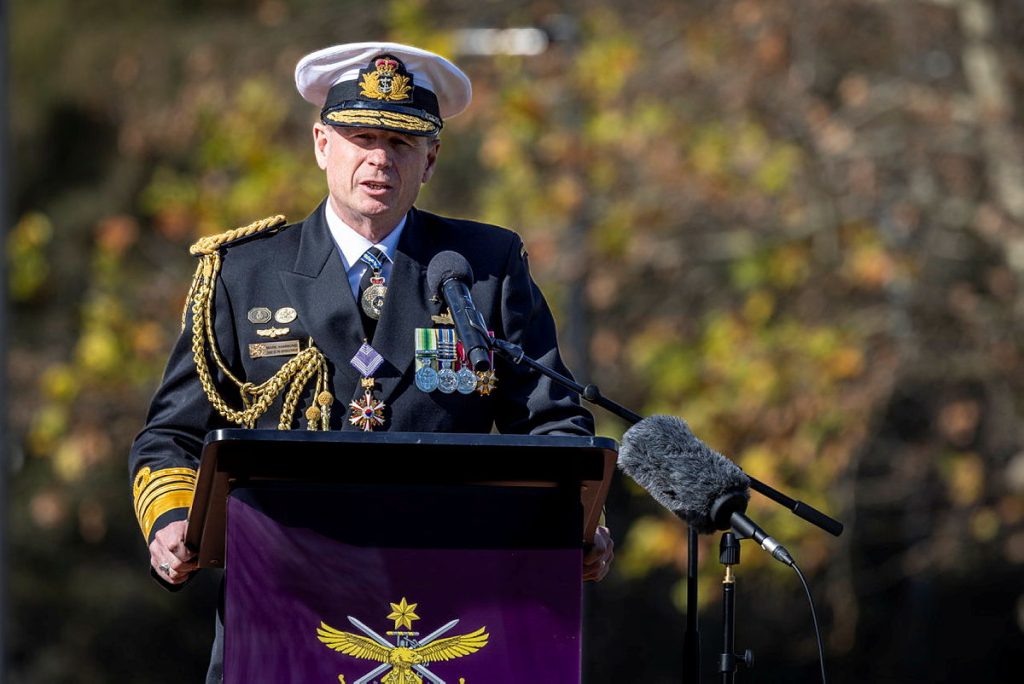
In his first address as Chief of the Defence Force, Admiral Hammond delivered a speech that was both strategic and personal, emphasising that Australia’s security environment has fundamentally changed.
Drawing on nearly four decades of service—including extensive submarine operations across the Indo-Pacific—Hammond said the region had transformed dramatically since his first deployment as a 19-year-old sailor.
He pointed to:
- Rapid advances in long-range missile technology;
- The growth of regional naval and air capabilities;
- Changing behaviour by some nations; and
- Increasing strategic competition throughout the Indo-Pacific.
Rather than portraying these developments as distant concerns, Hammond argued they demand an Australian Defence Force capable of adapting continuously to emerging threats.
Three Missions for Australia’s Defence Force
Central to Hammond’s vision was the implementation of the 2026 National Defence Strategy.
He outlined three enduring missions for the Australian Defence Force:
- Shape Australia’s strategic environment through partnerships and diplomacy;
- Deter actions against Australia’s national interests through credible military capability; and
- Remain prepared at all times to defend Australia and its national interests.
Summarising the approach, Hammond declared:
“Ready to shape. Ready to deter. Ready to defend.”
The remarks reinforce Australia’s strategic shift towards integrated deterrence, long-range strike capability and closer cooperation with allies, particularly under the AUKUS partnership.
Focus on Combat Capability and Efficiency
Beyond strategic messaging, Hammond also signalled an internal reform agenda.
He said Defence must maximise readiness while ensuring resources are directed toward warfighting capability rather than unnecessary bureaucracy.
“Our force should be as large and as lethal as we can make it,” he said, while stressing every dollar, every second and every member of Defence must be used as efficiently as possible.
Those comments come as Defence continues to oversee some of Australia’s largest capability investments, including AUKUS submarines, guided weapons, autonomous systems and long-range strike capabilities.
A Leader Shaped by Service
Hammond’s appointment is historic in several respects.
After joining the Royal Australian Navy as an enlisted sailor before later becoming an officer, he becomes the first Chief of the Defence Force to have begun his military career in the enlisted ranks—a point acknowledged during both his predecessor’s farewell and the Government’s appointment announcement.
Throughout his inaugural speech he repeatedly returned to one theme: people.
Paying tribute to Defence families, Australian Public Service staff and serving personnel, Hammond argued Australia’s sailors, soldiers and aviators remain Defence’s greatest capability.
He concluded by quoting Rudyard Kipling’s famous verses about the submarine service:
“Unheard, they work. Unseen, they win.”
The quotation captured the understated professionalism he said should define the modern Australian Defence Force.
A Symbolic Moment in a Broader Transformation
The ceremonial transfer of the Chief of Defence Force’s flag, accompanied by the ringing of eight naval bells and a 17-gun salute honouring Admiral Johnson’s retirement, underscored both continuity and renewal within Australia’s military leadership.
While ceremonial in appearance, the change of command arrives against a backdrop of significant strategic change. The Albanese Government has placed Defence transformation at the centre of national security policy, with the National Defence Strategy calling for a more integrated, technologically advanced and combat-ready force capable of responding to an increasingly contested Indo-Pacific.
For Admiral Hammond, the challenge now moves beyond ceremony. His tenure begins with responsibility for guiding the Australian Defence Force through one of the most ambitious periods of military modernisation in the nation’s history while ensuring Australia’s armed forces remain ready to deter conflict—and, if necessary, defend the nation.