
Andrew Leigh Warns Australia Is Becoming Less Connected as He Launches New ‘Trust Agenda’
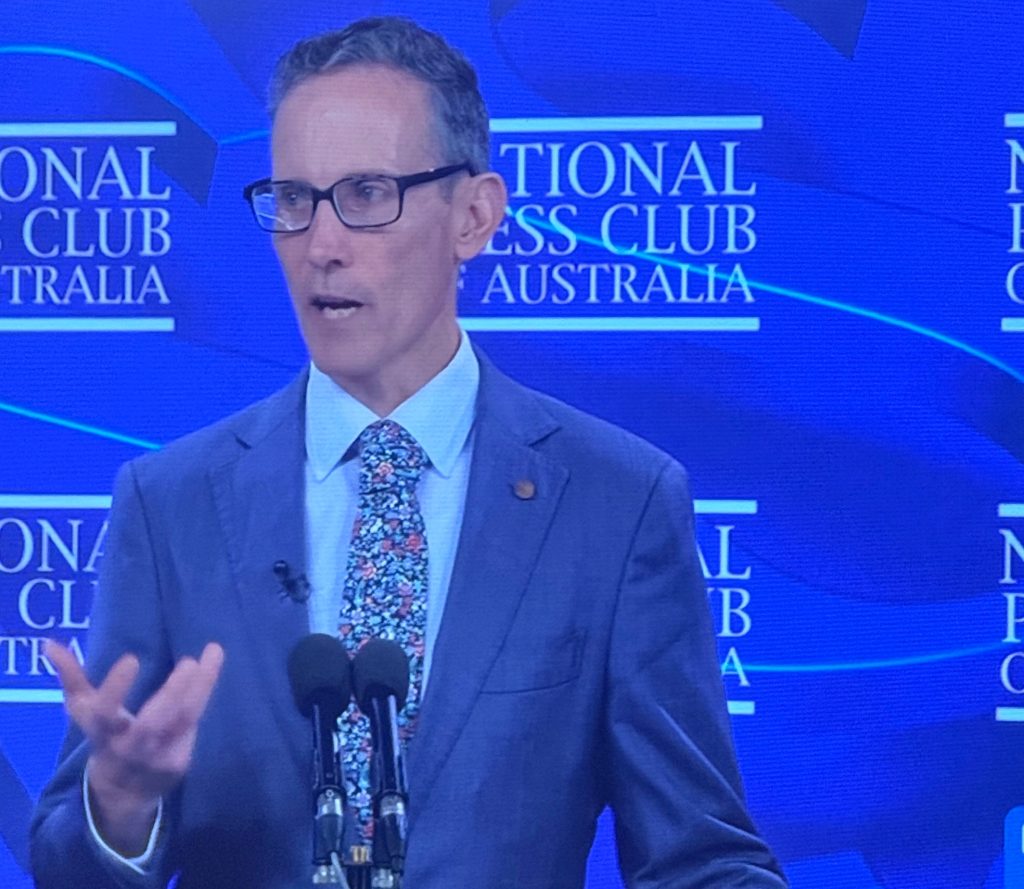
The Assistant Minister for Charities has unveiled a four-point plan to rebuild volunteering, philanthropy and community participation, warning that declining trust and civic engagement pose a growing challenge for Australia’s democracy and social cohesion.
Opening
Assistant Minister for Productivity, Competition, Charities and Treasury, Andrew Leigh, used a National Press Club address in Canberra on Wednesday to deliver a warning about what he described as Australia’s growing crisis of social disconnection, arguing that rebuilding trust and community participation should become a national priority.
Speaking on the theme “Rebuilding Trust: The Future of Australia’s Charities and Community Life”, Leigh argued that while Australians remain generous and resilient, many of the institutions that once connected communities are in long-term decline.
“Trust is national infrastructure,” Leigh told the audience, describing social capital as every bit as important as physical infrastructure and human capital.
Australia’s Quiet Civic Decline
Central to the address was a detailed examination of falling participation in community life.
Leigh cited research showing that the number of Australian associations per person has fallen by around four-fifths over recent decades, while membership rates across major organisations have dropped by approximately three-quarters since the 1960s.
Among the figures highlighted:
- Formal volunteering fell from 30 per cent of Australians in 2019 to 23 per cent in 2025.
- Participation in social groups declined from 51 per cent to 45 per cent.
- Community support group involvement dropped from 25 per cent to 21 per cent.
- Civic and political group participation fell from 9 per cent to 7 per cent.
- The proportion of Australians who believe most people can be trusted declined from 55 per cent to 50 per cent.
Leigh also pointed to longer-term trends, including falling religious participation, declining union membership, reduced organised sporting involvement and fewer close friendships.
“Our survey research found that the typical Australian had half as many close friends as in the mid-1980s and knew only about half as many neighbours,” he said.
Why Charities Matter
Leigh argued charities should not simply be viewed as service providers.
Instead, he described them as institutions that build social bonds, encourage participation and strengthen democracy itself.
“A charity is often where an Australian first learns that citizenship is a verb,” he said.
Throughout the speech he highlighted examples ranging from sporting clubs and arts organisations to migrant support services, environmental groups and community legal centres.
He singled out Canberra-based Stepping Stone Café, which has helped more than 60 migrant and refugee women transition into employment and community life over the past decade.
A Four-Point Trust Agenda
Leigh used the address to launch what he called a national Trust Agenda, built around four priorities:
1. Growing Community Foundations
Leigh said community foundations represented one of Australia’s most promising philanthropic developments.
He announced plans to streamline the process for community foundations seeking charitable recognition by removing ministerial declaration requirements and reducing regulatory hurdles.
His ambition is for community foundations to become a routine feature of Australian life by 2036.
“Imagine an Australia in which every major town and region has a trusted vehicle for local generosity,” he said.
2. Expanding Bequest Giving
Leigh highlighted what he described as one of the biggest opportunities facing the charity sector: Australia’s coming intergenerational wealth transfer.
According to figures cited in the speech, approximately $150 billion is transferred through estates annually, with an estimated $5.4 trillion expected to change hands over the next two decades.
Yet only around 1 per cent currently flows to charitable causes.
Leigh called for lawyers, accountants and financial advisers to make charitable giving a more normal part of estate planning conversations.
3. Building Digital Capability
The Minister warned of a widening technological divide across the sector.
While larger organisations increasingly possess sophisticated cyber security systems and donor management tools, many smaller charities continue to operate with minimal digital infrastructure.
He proposed a national “digital working bee” involving technology companies, universities, skilled volunteers and philanthropists to help charities improve digital capability.
4. Continuing Reform
Leigh also committed the Government to ongoing work with the sector on recommendations emerging from the Productivity Commission’s Future Foundations for Giving report and the Not-for-Profit Sector Development Blueprint.
Cutting Red Tape
The speech’s principal policy announcement was more than $2 million in funding to improve coordination between charity and corporate regulatory systems.
The reform aims to reduce duplication between the Australian Charities and Not-for-profits Commission and other government registers, allowing charities to spend less time completing forms and more time serving communities.
As Leigh put it:
“The aim is regulation with a backbone rather than regulation with a clipboard addiction.”
The Challenge of Social Media and Isolation
Some of the most revealing exchanges came during question time.
Leigh linked declining civic participation to growing social isolation, particularly among younger Australians.
Referencing overseas research, he noted that young people are increasingly spending more time alone, while social interaction is being displaced by online engagement.
“Social media trains us to react. Community life asks us to commit,” he said.
He argued that governments, parents and technology companies all had a role to play in helping Australians reconnect with real-world communities.
More Than a Charity Speech
While framed around charities and philanthropy, the address ultimately amounted to a broader reflection on the state of Australian society.
Leigh’s central argument was that declining volunteering, falling participation and weakening trust represent more than isolated social trends—they are warning signs about the country’s democratic and civic capacity.
“The challenge now is to become a country of joiners again,” he concluded.