
Australia’s Army enters a new era as Susan Coyle assumes command in historic leadership transition
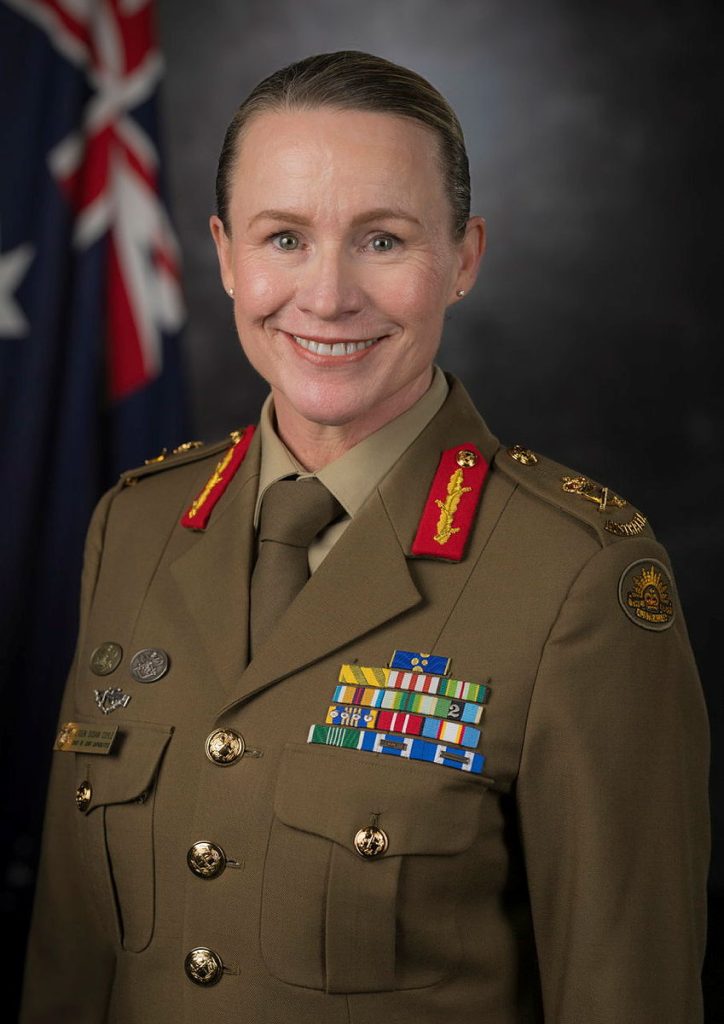
Photo: Nicole Mankowski / Department of Defence.
CANBERRA — The Australian Army has entered a new chapter with Lieutenant General Susan Coyle formally assuming command as the nation’s 42nd Chief of Army, succeeding Lieutenant General Simon Stewart in a ceremonial Change of Command Parade at Defence Headquarters in Canberra.
The ceremony, conducted on behalf of Chief of the Defence Force Admiral David Johnston, also marked the handover of the appointment of Regimental Sergeant Major of the Army from Warrant Officer Kim Felmingham to Warrant Officer Bradley Doyle, symbolising a simultaneous transition of both the Army’s commissioned and senior enlisted leadership.
The event represented more than a routine military succession. It marked the beginning of a new leadership era for the Australian Army at a time of accelerating strategic uncertainty across the Indo-Pacific and continuing implementation of the Australian Government’s defence reforms following the National Defence Strategy.
A historic appointment
Lieutenant General Coyle becomes the first woman in Australia’s 125-year history to lead the Australian Army, a milestone first announced by the Federal Government in April following a broad reshaping of Australia’s senior Defence leadership. Before assuming command she served as Chief of Joint Capabilities, overseeing Defence’s expanding responsibilities in space, cyber, logistics and information warfare.
Having enlisted in the Army Reserve in 1987 before graduating from the Royal Military College – Duntroon, Coyle has commanded at tactical, operational and strategic levels, including deployments to Afghanistan and senior appointments across the Australian Defence Force.
Yet despite the historic significance of her appointment, Coyle deliberately focused less on personal achievement than institutional stewardship.
Reflecting on nearly four decades of service, she recalled that the young Private Susan Dillon who joined the Hunter River Lancers in 1987 “would actually have giggled” at the prospect of one day becoming Chief of Army.
She described herself as “deeply humbled” by the appointment and characterised the position as “the pinnacle for any volunteer who serves their nation.”
Stewart’s farewell centred on gratitude
Outgoing Chief Lieutenant General Simon Stewart used his final address not to catalogue achievements, but to express gratitude.
Beginning with Australia’s fallen service personnel, Stewart paid tribute to the nearly 82,000 soldiers commemorated at the Australian War Memorial before acknowledging the more than 4,000 Australian soldiers currently deployed or standing ready on operations around the world.
Throughout his address, the theme of gratitude remained constant.
He thanked soldiers for embracing what he described as the Army’s central purpose: building trust, maintaining readiness and preparing for future conflict.
Stewart praised the Army’s efforts to remain “ready to fight tonight” while simultaneously reshaping itself for tomorrow’s strategic environment, highlighting the balance between immediate operational preparedness and long-term force transformation.
He also reflected on the unique bonds forged through military service.
“These are the treasures of service — those that cannot be bought or bestowed or taken from us. They can only be earned.”
His farewell concluded with a deeply personal tribute to his family before ending simply:
“Duty first, Godspeed, and good soldiering.”
Continuity rather than revolution
While leadership changed hands, Coyle’s speech suggested continuity rather than wholesale change.
She praised Stewart and his leadership team for transforming the Army during a period of significant strategic adjustment.
“Our Army is in an amazing position thanks to your leadership,” she said, adding that today’s Army “stands on the shoulders of giants.”
Rather than outlining sweeping reforms, Coyle identified two enduring priorities that will guide her tenure:
- putting Army personnel and their families first; and
- ensuring the Army remains a warfighting force capable of operating as part of an integrated Defence Force.
She emphasised that Australian soldiers must remain “ready to fight tonight, tomorrow, and together as part of an integrated force allied by design across all five warfighting domains.”
The phrase reflected Defence’s broader strategic shift towards greater integration across land, sea, air, cyber and space capabilities under the 2024 National Defence Strategy.
People remain at the centre
Despite discussion of integrated operations and evolving military capability, both speeches repeatedly returned to the human dimension of military service.
Coyle committed herself and the new Regimental Sergeant Major to visiting units across Australia, listening to soldiers and strengthening relationships with allies and regional partners.
She argued that putting soldiers and families first ultimately strengthens operational capability.
“Knowing that by doing so we will achieve or exceed our mission each and every day,” she said.
The emphasis echoed Stewart’s own message that military effectiveness depends as much upon trust, professionalism and character as it does upon equipment or organisational reform.
Ceremony steeped in military tradition
The parade itself reinforced the continuity of Army traditions.
Following inspection of troops drawn from the Royal Military College – Duntroon, the Army Banner—presented to the Army during its centenary celebrations—was passed through the outgoing command team before reaching Lieutenant General Coyle, symbolising the transfer of command.
Similarly, the ceremonial Regimental Sergeant Major’s paystick was transferred from Warrant Officer Felmingham to Warrant Officer Doyle, marking the transition of the Army’s most senior soldier.
The ceremony brought together Defence Secretary Megan Quinn, Chief of the Defence Force Admiral David Johnston, incoming Chief of Defence Force Vice Admiral Mark Hammond, senior Defence leaders, former Chiefs of Army and invited dignitaries.
Looking ahead
The change of command comes amid one of the most significant periods of military transformation in decades.
Australia continues to reshape its force structure around the strategic priorities identified in the National Defence Strategy, expand long-range strike capabilities, strengthen partnerships across the Indo-Pacific and integrate cyber, space and information capabilities more closely with traditional military operations.
While Lieutenant General Coyle’s appointment will inevitably be remembered for its historic significance, her inaugural address suggested she views her role less as a symbolic milestone than as the stewardship of an institution preparing for increasingly complex strategic challenges.
As she concluded her first speech as Chief of Army, her focus remained firmly on the soldiers she now commands.
“The RSM Army and I cannot wait to come and visit our people and see the amazing work that they do each and every day.”