
McBain rules out wider government use of AusAlert technology
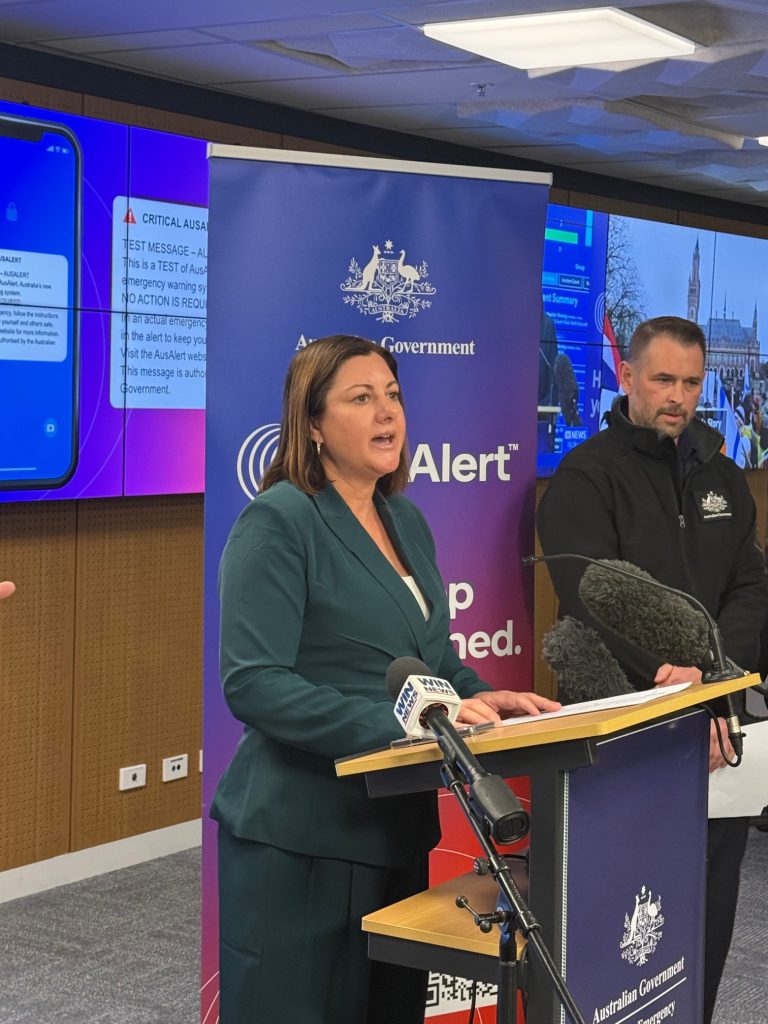
Responding to Inside Canberra in the National Situation Room, Minister for Emergency Management Kristy McBain said Australia would embrace proven cell-broadcast technology—but would not permit its powerful reach to be diluted through routine departmental messaging.
Australia’s new national emergency-warning system will not become a general communications channel for Commonwealth departments and agencies, Minister for Emergency Management the Hon Kristy McBain MP has declared following the first nationwide test of AusAlert.
Responding to a question from Inside Canberra at Monday’s press conference in the National Situation Room, McBain ruled out employing the underlying cell-broadcast capability for routine government communications, including administrative messages of the kind ordinarily sent by agencies such as the Australian Taxation Office.
“We would never want to dilute the effectiveness of a system like AusAlert by sending out messages that aren’t alert or aren’t critical,” McBain said.
“It is incredibly important for us that this technology remains for the context it’s required in, and that is for emergencies.”
The exchange addressed a consequential question extending beyond the immediate performance of Monday’s test.
AusAlert gives authorised public authorities the ability to command the attention of almost every compatible mobile device within a selected geographical area. During a Critical Alert, the system can override silent and “do not disturb” settings, activate a distinctive siren and place an emergency message directly on the recipient’s screen.
McBain emphasised that cell broadcast was an established international capability rather than a technology developed by the Australian Government.
“We didn’t create the technology, but we absolutely want to take advantage of it in the Australian context,” she said.
That distinction is important. Australia is not experimenting with an untested communications concept; it is incorporating an established technology into its emergency-management architecture.
The more substantial domestic policy question is therefore not simply whether the technology works, but who may use it, under what circumstances and subject to what safeguards.
A boundary around a powerful capability
The question put by Inside Canberra concerned whether cell-broadcast technology, once embedded within national infrastructure, could subsequently be made available to other departments and agencies for purposes beyond emergency management.
McBain’s answer established a clear ministerial position: AusAlert is not intended to become an alternative channel for taxation notices, administrative reminders, compliance messages, public-information campaigns or other routine government communications.
That limitation is central to the system’s effectiveness.
An alert capable of interrupting a person’s activity, producing an unmistakable siren and overriding the ordinary settings of a mobile device derives much of its authority from rarity.
If Australians were repeatedly interrupted by messages that did not concern an immediate or developing danger, familiarity could diminish the urgency that the warning is intended to convey.
Alert fatigue is not merely an inconvenience. It can encourage recipients to disregard warnings or become less responsive when rapid public action is genuinely required.
McBain’s undertaking therefore recognises that the technological capacity to reach millions of devices should not, by itself, become an argument for expanding governmental access.
She said state and territory emergency authorities would initiate the overwhelming majority of warnings.
“At the end of the day, 99 per cent of the time, states and territories will be using this system,” she said.
The relevant emergency authority will determine whether an alert is required, define the affected area and provide information about the nature and severity of the incident, the action recipients should take and where further advice can be obtained.
Commonwealth agencies may retain emergency access
Although routine departmental use has been ruled out, AusAlert’s prospective remit extends beyond natural disasters such as bushfires, floods and cyclones.
Information published by the National Emergency Management Agency says authorised emergency-service organisations and “some Australian Government agencies” will be able to issue warnings.
The system may be employed during serious public-safety and national-security threats, terrorist incidents, biosecurity events and public-health emergencies, as well as natural hazards.
Commonwealth involvement is therefore contemplated, but the relevant distinction is the purpose of the communication rather than simply the identity of the agency issuing it.
A health authority warning Australians about an acute public-health emergency, or a national-security agency directing people away from an immediate threat, could fall within AusAlert’s stated remit. A taxation reminder, policy announcement or ordinary departmental communication would not.
The Government has not yet published a definitive list of Commonwealth bodies that will be authorised to originate warnings or the complete approval framework governing federally initiated alerts.
As AusAlert becomes operational, the adequacy and transparency of those arrangements will warrant scrutiny. The Government’s stated boundary is clear, but its durability will ultimately depend upon the authorisation controls, operating procedures and auditing arrangements established around the system.
How cell-broadcast technology works
AusAlert uses cell broadcast to transmit a single warning simultaneously from selected mobile towers to compatible devices within their coverage areas.
It differs fundamentally from Australia’s existing Emergency Alert service, which principally relies upon location-based SMS messages and automated calls to landlines.
An SMS is addressed and sent to an individual mobile number. Delivering warnings separately to hundreds of thousands of recipients can create queues and delays, particularly when telecommunications networks are experiencing unusually heavy demand.
Cell broadcast instead operates as a one-to-many transmission.
An authorised emergency organisation identifies the affected geographical area and prepares the warning. Participating telecommunications networks are then directed to broadcast the message from the mobile-network cells serving that area.
Compatible devices listening for the designated emergency-warning channel can receive the transmission almost simultaneously. Authorities do not need to compile a list of telephone numbers or send a separate message to each subscriber.
Because the warning is broadcast to devices rather than delivered to individual accounts, compatible phones do not require an active SIM card. They must, however, be switched on, connected to an operating network and within active 4G or 5G mobile coverage.
The technology can also continue broadcasting for a specified period. A compatible device entering an affected area after the original warning was issued may therefore still receive it.
This is why the capability offers greater speed and resilience than an emergency system dependent upon individually addressed messages—and why McBain said the Government wanted to take advantage of the technology in an Australian context.
Privacy and performance measurement
NEMA says AusAlert does not collect or store recipients’ telephone numbers or locations. Users do not need to register, provide personal information or download a dedicated application.
The warning is transmitted from selected towers to every compatible device capable of receiving the relevant broadcast channel. It is therefore a one-way public-warning mechanism rather than a system for identifying or tracking individual recipients.
That privacy-preserving architecture creates an important operational limitation: authorities do not receive an ordinary delivery receipt from every handset.
They can establish whether the selected towers successfully transmitted an alert, but they cannot use that result to determine precisely how many individual devices displayed it.
This distinction is essential to interpreting the Government’s preliminary result from Monday’s test.
McBain said approximately 94 per cent of targeted mobile towers successfully transmitted the warning, exceeding NEMA’s benchmark of 90 per cent.
“We’ve already exceeded the target that we set,” she said.
“The benchmark that the National Emergency Management Agency set was for 90 per cent of towers. We’ve reached nearly 94 per cent of towers across the country.”
The result does not mean that 94 per cent of Australians—or 94 per cent of mobile phones—received the alert. It measures the proportion of towers included in the test that successfully carried the transmission.
The remaining six per cent included towers that were offline for maintenance, undergoing upgrades or otherwise unavailable at the time.
NEMA begins detailed assessment
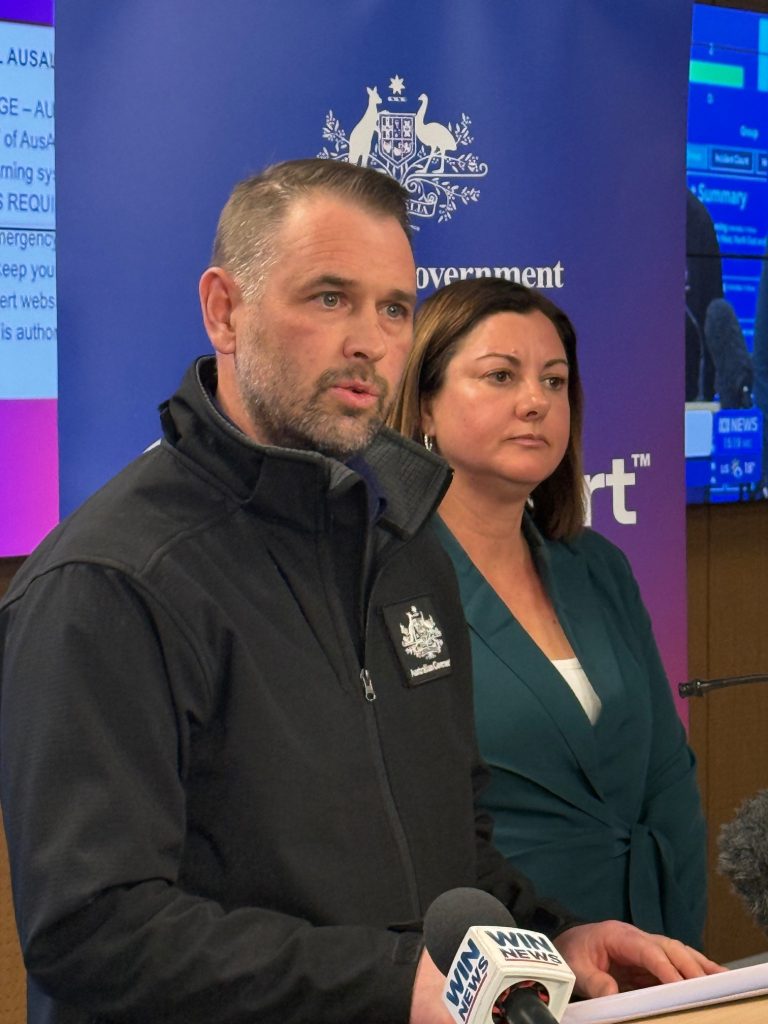
Interim NEMA Coordinator-General Patrick Hetherington said the national exercise was intended to demonstrate how the system performed “at scale across millions of devices and in hundreds of different environments”.
“NEMA will now assess all of the data, including reports from our technical and operational partners, jurisdictions and community feedback,” Hetherington said.
The agency will conduct a detailed examination of the results and make any necessary modifications before AusAlert becomes available to governments and emergency-service organisations from October 2026.
Hetherington’s remarks supplied the operational counterpart to McBain’s policy undertaking. While the Minister addressed who should be permitted to use the capability and for what purpose, NEMA must now determine how reliably it performed across different networks, locations, devices and operating systems.
Some Australians did not receive Monday’s warning because their devices were incompatible, their software had not been updated, they were outside active coverage or they were connected to a tower that did not successfully transmit the test.
Different results among people in the same location do not necessarily indicate a systemic failure. Nearby devices may use different telecommunications providers, connect to different towers or operate with different hardware and software.
The official guidance for the national test says understanding these real-world variations is one of the reasons AusAlert is being tested before it becomes operational.
McBain cautioned that the system could not replace every existing communication channel.
“There is no silver bullet in emergency management communication,” she said.
AusAlert will supplement emergency-service websites, mobile applications, radio, television, social media and direct community contact.
Geographic precision—and its limitations
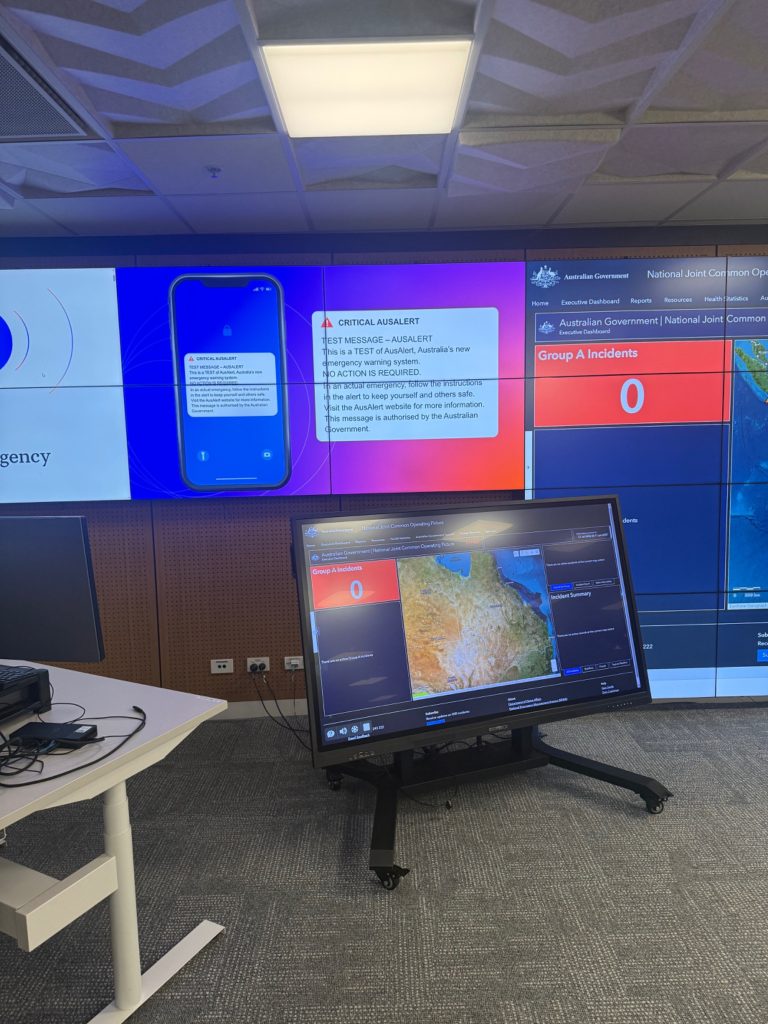
NEMA says AusAlert can target areas with accuracy of up to 160 metres and may, in appropriate circumstances, be directed towards a limited precinct or individual building.
This could allow authorities to issue more precise evacuation instructions, warn people on one side of a jurisdictional border or avoid unnecessarily alarming communities outside an affected area.
The practical reach of a warning will nevertheless depend upon the configuration and coverage patterns of the selected mobile cells, surrounding terrain, network conditions and the tower to which each device is connected.
Cell broadcast does not rely upon the GPS location of every handset to draw a perfectly impermeable boundary around a property.
A person close to the edge of the selected area may receive an alert while technically outside it. Conversely, somebody within the intended area could miss the warning if their device is incompatible, its software has not been updated or a relevant tower is unavailable.
The technology consequently represents a substantial improvement in geographical targeting rather than a guarantee that every person within a precisely drawn perimeter will receive a warning.
Critical and Priority Alerts
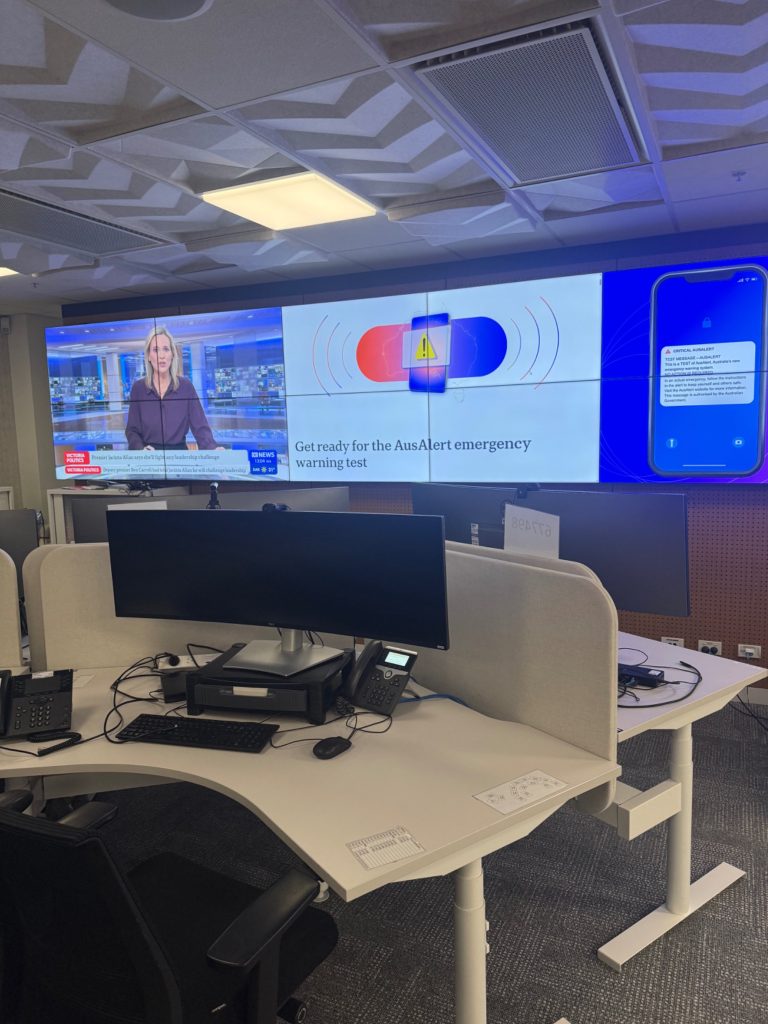
AusAlert will employ two principal warning levels.
A Critical Alert indicates an immediate threat to life or property. It produces a siren-like sound and vibration for approximately ten seconds, overrides silent and “do not disturb” settings and cannot be disabled through ordinary device preferences.
A Priority Alert applies to serious but less immediate circumstances, including deteriorating conditions or a heightened threat. It can be disabled by the device user and will not override silent or “do not disturb” settings.
Monday’s nationwide exercise used a Critical Alert. During the 15-minute testing window beginning at 2pm AEST, compatible devices emitted the warning sound and displayed a message identifying the transmission as a test.
Government compatibility guidance says AusAlert is expected to operate on iPhone 11 and subsequent models running iOS 26.4 or later, selected Apple Watches and Android devices running Android 12 or later.
Some older devices and phones using alternative operating systems may also receive alerts, although the headings displayed can differ. Apple iPads are not supported.
October launch and staged transition
AusAlert is scheduled to become available from 1 October, subject to agreements with individual states and territories and the operational readiness of their emergency authorities.
The existing SMS-based Emergency Alert system will initially remain available, allowing jurisdictions to use one or both platforms through the forthcoming higher-risk weather season while personnel are trained and operating procedures refined.
The new system emerged from recommendations made by the Royal Commission into National Natural Disaster Arrangements following the Black Summer bushfires.
McBain, whose electorate of Eden-Monaro was heavily affected, recalled that some residents and visitors received emergency text messages only after leaving the disaster area several days later.
Cell broadcast offers a significant improvement in speed, resilience and geographical precision. As the Minister observed, Australia did not create the technology—but its incorporation into the national warning system presents distinctly Australian questions about access, authority and public trust.
Monday’s exchange with Inside Canberra in the National Situation Room provided the Government’s clearest answer to one of those questions: AusAlert will remain an emergency-warning system, not a universal channel through which departments and agencies routinely command the attention of Australians’ mobile devices.
Maintaining that boundary will be essential to preserving the credibility—and therefore the effectiveness—of the system when a warning truly matters.m provided the Government’s clearest answer to one of them: AusAlert will remain an emergency-warning system, not a universal channel through which departments and agencies routinely command the attention of Australians’ mobile devices.
Maintaining that boundary will be essential to preserving the credibility—and therefore the effectiveness—of the system when a warning truly matters.