
Andy Burnham promises a ‘circuit breaker for Britain’ in first address as Prime Minister
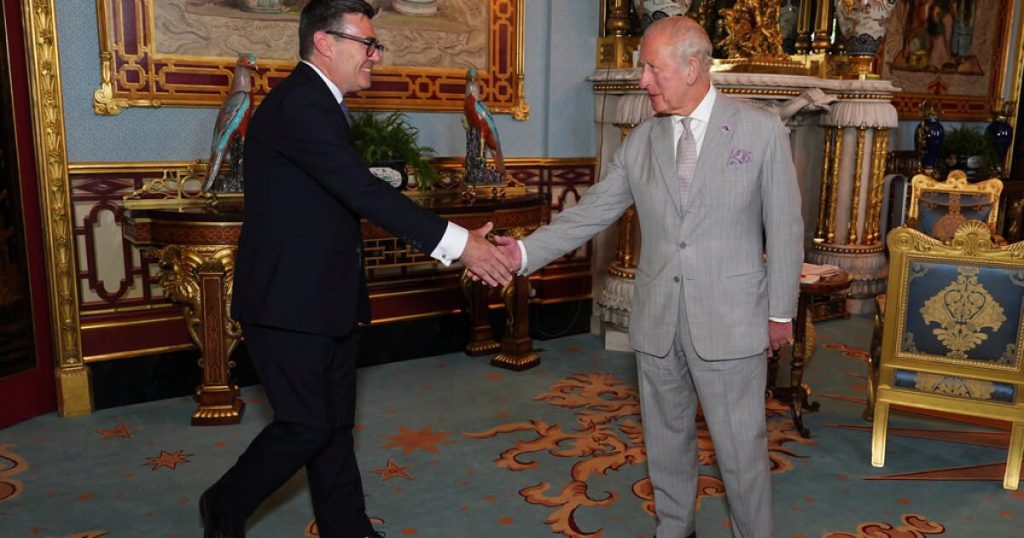
Britain’s new Labour Prime Minister has used his first Downing Street address to promise immediate cost-of-living relief, a 10-year national plan, stronger public control of essential services and an extensive transfer of power from Westminster.
LONDON | 20 July 2026
The Right Honourable Andrew Burnham MP — universally known as Andy Burnham — has become Prime Minister of the United Kingdom after accepting an invitation from His Majesty King Charles III to form a government.
Standing outside 10 Downing Street after his audience at Buckingham Palace, the new Prime Minister acknowledged the extraordinary instability of recent British politics and presented his accession as an opportunity for both institutional and economic renewal.
“We have not been good enough, and we need to be better,” the Prime Minister said. “We will be.”
Mr Burnham described his proposed program as a “circuit breaker for Britain”, promising what he called the largest changes in four decades through “a new political model and a new economic model”.
It was an unusually expansive first address. Rather than confining himself to the customary language of continuity, public service and national unity, Mr Burnham sketched the ideological architecture of his government: devolution from Westminster, reindustrialisation, a stronger public role in essential services, greater investment in prevention and immediate intervention in the cost-of-living pressures confronting British households.
The King invites Burnham to form a government
The constitutional transfer followed the resignation of The Right Honourable Sir Keir Starmer KCB KC MP, whose departure brought his two-year premiership to an end.
Buckingham Palace recorded that His Majesty received The Right Honourable Andrew Burnham MP in audience, requested him to form a new administration and that Mr Burnham accepted The King’s offer and “kissed hands” upon his appointment as Prime Minister and First Lord of the Treasury. Ms Marie-France van Heel was also received by His Majesty.
The ceremonial language of “kissing hands” is the historic formula marking a prime ministerial appointment; in contemporary practice it denotes acceptance of office during the Sovereign’s audience.
Mr Burnham is the fourth Prime Minister to serve during The King’s reign and the seventh person to hold the office since 2016. His official government style is The Right Honourable Andy Burnham MP, Prime Minister, First Lord of the Treasury, Minister for the Civil Service and Minister for the Union.
The change of Prime Minister occurred without a general election. Under the United Kingdom’s parliamentary system, Labour’s majority in the House of Commons enabled its newly elected leader to form a government after Sir Keir tendered his resignation to The King.
Mr Burnham’s return to Westminster has been remarkably swift. After serving as Mayor of Greater Manchester from 2017, he returned to the House of Commons as the Labour and Co-operative Member for Makerfield in a by-election on 18 June. The Labour Party elected him leader on 17 July after he secured the support of 379 Labour MPs and 23 affiliated organisations.
His earlier ministerial career included service as Chief Secretary to the Treasury, Secretary of State for Culture, Media and Sport, and Secretary of State for Health under previous Labour governments.
A repudiation of the post-1980s settlement
The most consequential passage of Mr Burnham’s address was his explicit criticism of the direction taken by Britain in the 1980s.
He argued that political power had been centralised, economic power privatised and substantial parts of the country deindustrialised — leaving communities that had never fully recovered and lacked sufficient authority to change their circumstances.
The diagnosis was followed by a distinctly interventionist prescription. The Prime Minister promised to transfer power from Westminster “into every postcode in the land”, make politics more collaborative and place essential services under stronger public control so they could become more affordable.
He also pledged to use public procurement to support British industry and to pursue the reindustrialisation of the country. The precise reach of the public-control agenda was not defined, but its prominence in the speech establishes a clear test for the policy program now to follow.
Mr Burnham said a 10-year plan for Britain would be released later this year, setting out a path intended to attract support beyond Labour’s traditional constituency. Before then, he promised measures beginning on Tuesday to give households “some breathing space” from the cost of living — together with an explanation of how they would be financed.
That commitment to publish the funding mechanism is politically important. The scale of Mr Burnham’s declared ambition will be judged not merely by its social objectives, but by whether it can be reconciled with the fiscal rules he has inherited and with the confidence of markets, industry and the electorate.
Council housing, youth employment and a preventative state
The first address also offered several more specific priorities.
The Prime Minister promised changes to education and expanded mental-health support to help more young people enter employment. He committed the Government to building more council housing, presenting increased supply as a fairer and more durable means of reducing welfare expenditure.
He coupled those social commitments with an undertaking to meet the Government’s fiscal rules and honour Britain’s defence obligations to its international partners.
Mr Burnham further proposed what he termed a “more preventative state” — investing earlier in people’s health, security and prospects rather than meeting the higher cost of failure after it occurs.
His first instruction on entering 10 Downing Street, he said, would be to begin the work of ending rough sleeping across the country.
The measures collectively reflect the governing approach he developed in Greater Manchester: an emphasis on devolved authority, integrated public services and intervention intended to prevent social and economic problems from becoming more acute and expensive.
The early significance for Canberra
For Canberra, the most immediately relevant line in the address was Mr Burnham’s promise to honour Britain’s defence commitments to its international partners.
The Prime Minister did not mention Australia, AUKUS or the Indo-Pacific, and no detailed foreign-policy doctrine was presented. Nevertheless, the assurance of continuity on defence obligations will be read closely in Australia as the new Government settles its Cabinet, spending priorities and strategic program.
The existing policy foundation is substantial. At the May 2026 AUKUS Defence Ministers’ meeting, Australia, the United Kingdom and the United States affirmed that Pillar I remained on track. The June Australia–UK Ministerial Consultationsalso reiterated cooperation on AUKUS workforce development, defence industry and regional security.
Mr Burnham’s emphasis on public procurement and British reindustrialisation may also acquire bilateral importance. Australia’s future nuclear-powered submarine capability depends upon an increasingly integrated industrial and skills base across the three AUKUS partners. The practical question will be how the new Prime Minister’s domestic industrial policy interacts with those shared supply chains and delivery obligations.
The Buckingham Palace audience itself occurred in His Majesty’s capacity as King of the United Kingdom. The King’s constitutional office in Australia is legally distinct, notwithstanding that the same person occupies both Crowns.
Ambition now confronts delivery
Mr Burnham concluded by promising to place the care of people at the centre of his Government and appealing for unity, common purpose and a more positive national temper.
“Let us make this the moment when Britain starts to believe again,” he said, “the moment we bring back hope.”
The speech provided a clear account of the new Prime Minister’s political instincts, but the immediate burden of proof will fall upon the measures he has promised to announce on Tuesday. Their scale, funding and administrative readiness will indicate whether the proposed “circuit breaker” is principally a change in tone or the beginning of the structural transformation Mr Burnham has pledged.