Defence Overhaul: Conroy Unveils Sweeping Procurement Reforms as Government Targets Delays, Cost Blowouts and Sovereign Capability
By Michael Keating | Inside Canberra
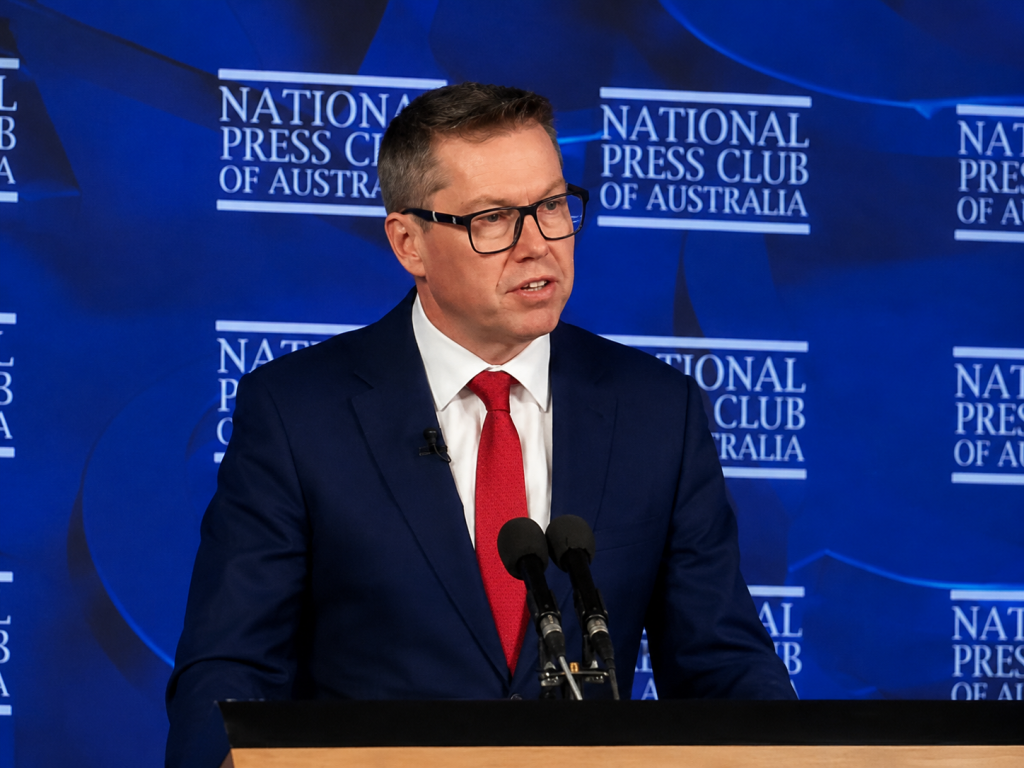
Australia’s defence procurement system is set for its biggest structural overhaul in half a century, with Defence Industry Minister Pat Conroy using a National Press Club address to announce a series of reforms aimed at reducing cost blowouts, accelerating project delivery and strengthening Australia’s sovereign defence industrial base.
While much of the speech was devoted to the government’s “progressive patriotism” narrative, the substantive announcements centred on a fundamental redesign of how Defence develops, approves and delivers capability.
A procurement system the government says is no longer fit for purpose
Perhaps the most striking element of Conroy’s address was his blunt assessment of Defence’s procurement processes.
Rather than blaming Defence personnel, Conroy repeatedly argued that outdated systems had become the principal cause of escalating costs, delays and inefficiency.
According to reforms examined by the government’s Defence Reform Taskforce:
- Average project costs increased by 38 per cent before contracts were even signed.
- Across the sample examined, this represented approximately $29 billion in additional projected costs before industry delivery even began.
- Many capability requirements were repeatedly altered during project development, driving delays and substantial redesign costs.
Conroy argued that the problem frequently began long before equipment reached Australian industry.
“Changes kill budgets. Changes kill schedule.”
The Minister also criticised what he described as a culture that rewarded increasingly complex capability requirements rather than realistic and deliverable projects.
Investment Committee abolished
One of the day’s largest structural announcements was the abolition of Defence’s long-standing Investment Committee.
According to Conroy, the committee had evolved into a bureaucratic bottleneck.
He revealed:
- the committee consisted of 26 senior members
- met for roughly 60 hours during 2025
- generated meeting papers between 400 and 1,000 pages
- more than 56 per cent of recommendations required no decision at all, serving merely as items “for noting”.
The government will replace the committee with a much smaller Capability Investment Board comprising just four members tasked specifically with making timely decisions and enforcing accountability.
The change is intended to reduce duplication while accelerating project approvals.
New Defence Delivery Agency
The reforms also establish an entirely new delivery structure.
A newly formed Defence Delivery Group, led by Interim National Armaments Director Nadine Williams, has already commenced operations and will transition into a permanent Defence Delivery Agency over the next year.
Under the revised model:
- the Vice Chief of the Defence Force will be responsible for determining capability requirements;
- the National Armaments Director will become directly accountable for project delivery;
- clearer lines of responsibility will replace what Conroy described as fragmented decision-making.
The National Armaments Director will report directly to ministers, with dedicated budget authority designed to strengthen accountability throughout major acquisition programs.
Hunter-class project cited as cautionary example
Conroy singled out the Hunter-class frigate program as an example of the shortcomings of the previous procurement model.
He argued that repeated changes to requirements had driven significant additional costs and schedule pressures without sufficient consideration of their cumulative impact.
The Minister said hundreds of millions of dollars in project modifications had been approved despite the consequences for design, cost and timelines, describing this as symptomatic of a broader system that encouraged “gold-plated” requirements rather than disciplined capability management.
Reducing reliance on consultants
Another major focus was rebuilding Defence’s internal commercial capability.
Conroy revealed that when Labor entered government there were more than 8,000 contractors and consultants working within Defence.
That number has already fallen to around 5,000, with further reductions expected over the next three years.
The government estimates these changes will save more than $3 billion by 2028–29 while rebuilding Defence’s own procurement and project management expertise.
Defence industry receives further backing
Alongside governance reforms, the government announced several new industry initiatives.
Among them:
- Ghost Shark autonomous underwater vehicles will become an official Defence export priority.
- A further $80 million will be added to Defence industry grants, bringing total support to approximately $250 million.
- Defence prime contractors will be required to employ minimum numbers of apprentices.
- The $3 billion Defence Export Facility will be overhauled after being used only three times since its creation in 2018.
- Procurement reforms will place greater emphasis on commercially available “military off-the-shelf” solutions where appropriate rather than pursuing unnecessarily customised platforms.
AUKUS remains central
Conroy also used the address to defend AUKUS amid continuing internal debate within sections of the Labor Party.
He argued the submarine program was progressing against key milestones and described it as Australia’s largest-ever industrial undertaking.
During questioning, he maintained that AUKUS strengthens Australian sovereignty through domestic submarine construction, workforce development and long-term industrial capability rather than diminishing it.
Pacific partnerships tied to national security
The Minister linked Australia’s defence strategy with its growing diplomatic engagement across the Pacific.
He pointed to recently signed agreements with Vanuatu, Tuvalu, Nauru and Papua New Guinea, arguing regional partnerships now form an increasingly important component of Australia’s broader security architecture.
Inside Canberra analysis
Away from the political messaging, the speech contained several significant policy developments that will likely attract bipartisan attention.
The abolition of the Investment Committee, creation of the Capability Investment Board and establishment of a Defence Delivery Agency represent some of the most substantial administrative changes to Defence procurement in decades.
Equally notable were the Minister’s admissions regarding long-standing weaknesses within project development—particularly his acknowledgement that billions of dollars in additional costs can accumulate before contracts are even awarded.
Whether these reforms ultimately deliver faster acquisitions, lower costs and improved accountability will depend on implementation. However, the government’s willingness to publicly acknowledge structural shortcomings within Defence procurement marks a notable shift in tone and suggests reform, rather than simply increased expenditure, is becoming a central focus of Australia’s defence policy.