
Ted O’Brien Unveils Coalition Foreign Policy Vision as One Nation Question Sparks Telling Exchange
By Michael Keating | Inside Canberra
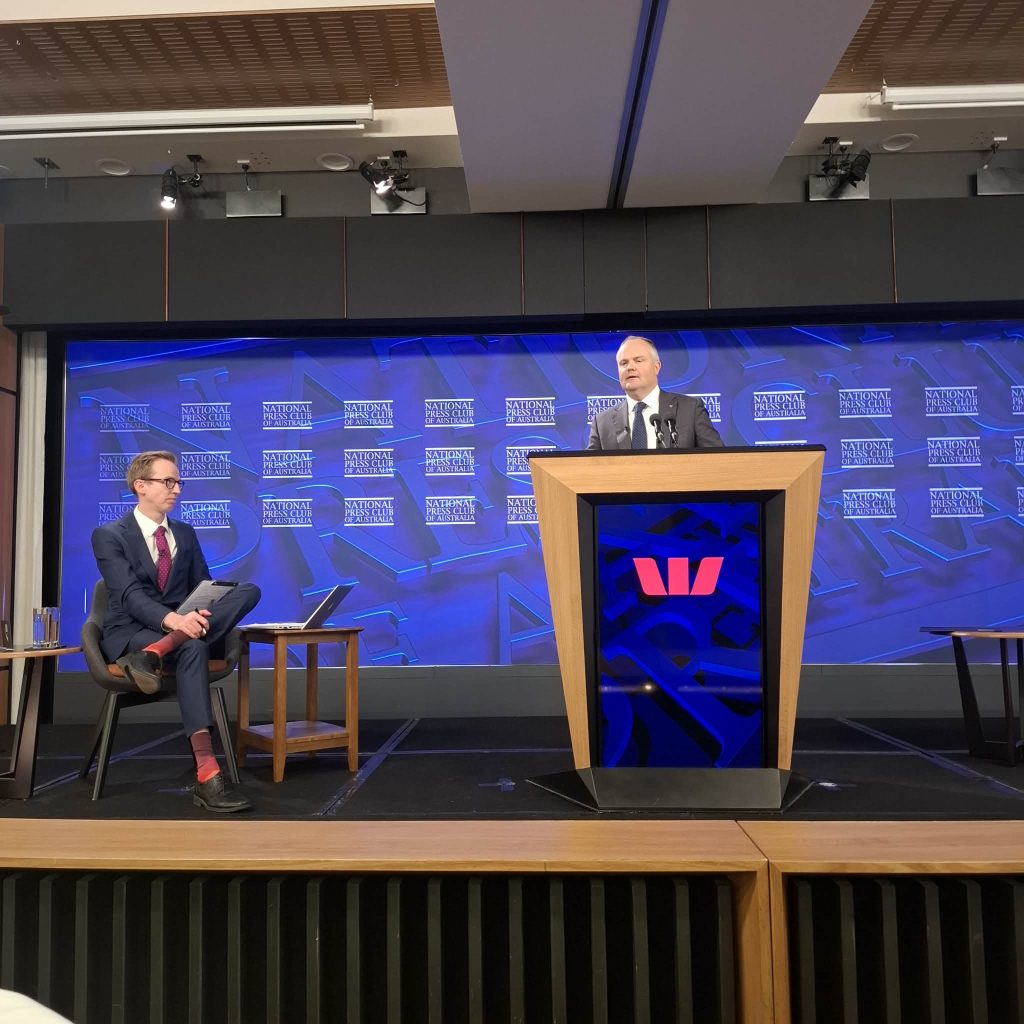
The Coalition’s new Shadow Foreign Minister Ted O’Brien has used his first major foreign policy address to argue that Australia’s international influence is being undermined by economic weakness at home, while also hinting at the political calculations shaping the Opposition’s path back to government.
Addressing the National Press Club on Wednesday, O’Brien outlined what he described as a new foreign policy doctrine built around a simple premise: “foreign affairs starts at home.”
The speech sought to reposition the Coalition’s foreign policy thinking after its election defeat, presenting a vision that blends traditional strategic alliances with a stronger focus on economic strength, energy security and social cohesion as prerequisites for international influence.
But while much of the address focused on China, the United States and the Pacific, one of the most politically revealing moments came during questioning about One Nation and the Coalition’s future electoral strategy.
A New Foreign Policy Framework
O’Brien argued Australia is entering the most significant period of strategic and economic upheaval since the Second World War.
He identified three defining forces shaping the international environment:
- Strategic competition between the United States and China;
- The increasing convergence of economics and national security;
- Rapid technological change driven by artificial intelligence, cyber capabilities and advanced manufacturing.
Rejecting suggestions Australia must choose between Washington and Beijing, O’Brien said the nation should avoid viewing foreign policy through a “binary prism”.
“The United States is our primary ally and China our key trading partner. That won’t change,” he said.
However, he argued Australia must reduce economic vulnerabilities by diversifying trade and strengthening strategic industries including artificial intelligence, critical minerals, energy, defence technology and digital infrastructure.
The speech reflected growing concern within Coalition ranks that Australia’s economic dependence on China and declining productivity at home are becoming national security issues as much as economic ones.
Labor Accused of Lacking Strategic Vision
While acknowledging the Albanese Government’s efforts in building relationships across the Pacific, O’Brien repeatedly accused Labor of lacking a coherent strategic framework.
He argued the Government has focused on managing relationships rather than articulating a broader vision of Australia’s place in the world.
“I actually think they’re lost,” he said during questioning.
That criticism extended beyond diplomacy into domestic policy.
O’Brien claimed Australia had entered recent international crises from a position of weakness rather than strength, blaming rising debt, falling productivity, declining living standards and what he described as uncontrolled spending.
The Coalition’s foreign affairs spokesman repeatedly linked foreign policy success to domestic economic performance, arguing that Australia’s international standing has fallen alongside its economic competitiveness.
It is a theme likely to become central to Opposition Leader Angus Taylor’s broader economic narrative.
Pacific Security Pact Proposal
The major policy announcement from the address was a proposal for a formal regional security agreement among Pacific Island Forum nations.
O’Brien revealed the Coalition would pursue discussions on a Pacific-wide security arrangement if returned to government and if Pacific nations wished to co-design such an agreement.
The proposal builds upon recent discussions promoted by new Solomon Islands Prime Minister Matthew Wale and would seek to formalise cooperation on security, law enforcement and transnational crime.
Significantly, O’Brien framed the proposal not simply as a response to China’s growing influence in the region but as a mechanism for addressing practical security challenges affecting Pacific nations themselves.
He pointed to drug trafficking routes moving through Pacific states into Australia and New Zealand, citing concerns raised during recent visits to Papua New Guinea and Fiji.
The proposal appears designed to elevate the Coalition’s Pacific strategy beyond individual bilateral agreements and provide an overarching regional framework.
Energy Security Becomes Foreign Policy
One of the speech’s most striking themes was the integration of energy policy into foreign affairs.
O’Brien argued that Australia’s energy system has become a strategic vulnerability and directly linked domestic energy policy to international influence.
He criticised Labor’s pursuit of net zero emissions targets, claiming Australia was becoming less competitive while failing to reduce emissions effectively.
In comments likely to resonate within Coalition ranks, O’Brien described energy as “geopolitical currency” and argued Australia should expand gas production and unlock uranium resources.
The remarks suggest a future Coalition government would increasingly frame energy debates as national security questions rather than purely environmental or economic issues.
China, Taiwan and the United States
Despite adopting tougher language on strategic competition, O’Brien avoided inflammatory rhetoric on China.
Drawing on his own experience living and working in China, he emphasised respect for Chinese culture and strongly defended Australia’s Chinese-Australian community.
He explicitly rejected efforts to blame Chinese-Australians for disagreements between Canberra and Beijing.
On Taiwan, O’Brien maintained the Coalition’s longstanding position opposing any unilateral change to the status quo but refused to speculate on military responses to a potential Chinese invasion.
Similarly, while acknowledging Donald Trump’s unconventional leadership style, he dismissed suggestions Australia should reconsider the alliance with the United States.
“The United States is our primary ally. That will not change,” he said.
The One Nation Question
Yet the most politically revealing exchange came in the final minutes of the event.
Asked whether the Coalition’s foreign policy objectives were compatible with One Nation’s positions on foreign aid, the United Nations and tariffs, O’Brien largely sidestepped the question.
Later, when pressed directly on whether he aligned more closely with Coalition figures who wanted to isolate One Nation or those advocating preference deals, O’Brien delivered a line that immediately drew attention in the room.
“I prefer to play footsies with One Nation than go to bed with the Greens,” he said.
The remark was both a political attack on Labor and a revealing insight into the Coalition’s emerging strategic calculations.
While O’Brien subsequently insisted preference discussions were premature and that the Coalition’s focus should remain on maximising its own primary vote, the answer highlighted the Opposition’s dilemma.
Current polling suggests the Coalition may ultimately require support from parties such as One Nation to form government.
At the same time, figures such as Andrew Hastie have argued for aggressively competing against One Nation rather than accommodating it.
O’Brien attempted to walk a careful line between those positions, refusing to commit either way while making clear he sees Labor’s relationship with the Greens as the greater political concern.
The Bigger Picture
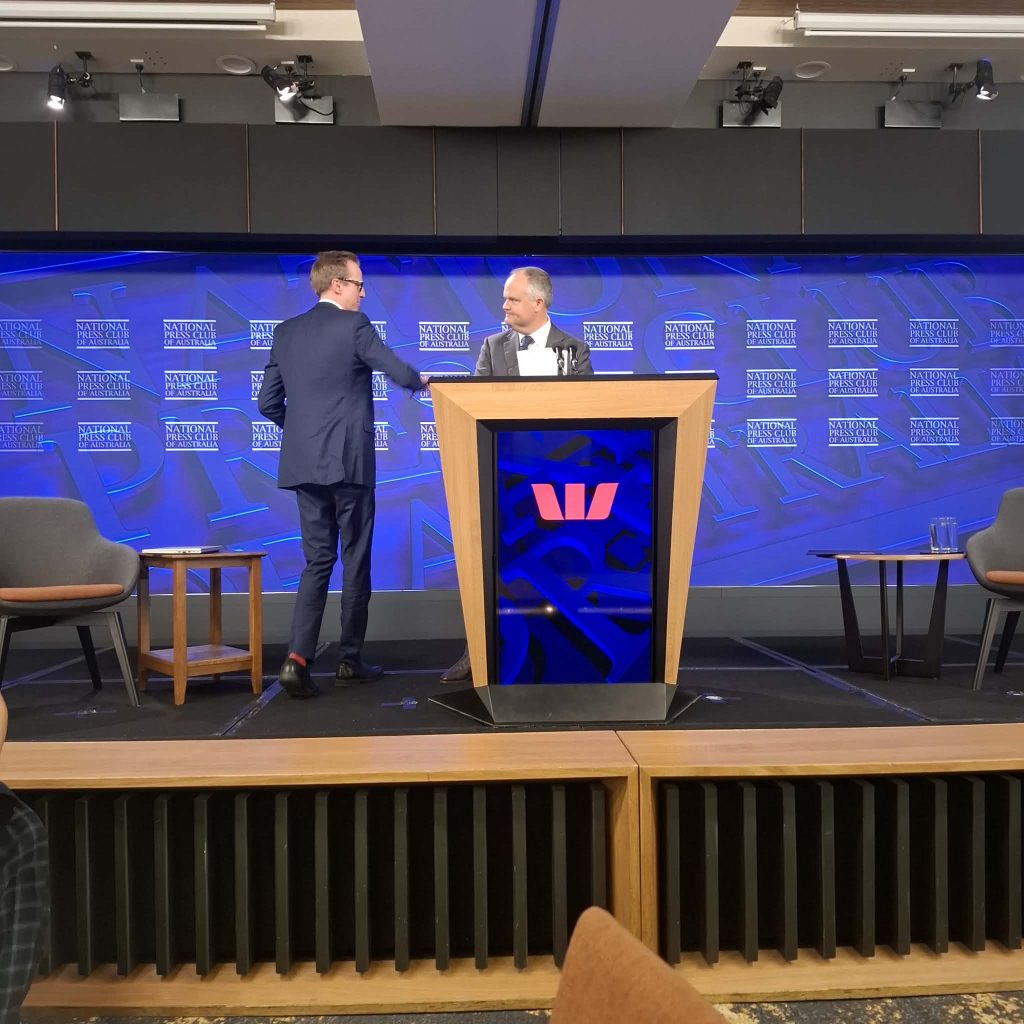
Taken as a whole, the speech was less a detailed foreign policy blueprint than an attempt to establish a philosophical framework for the Coalition’s future agenda.
O’Brien’s central argument is that national power begins with domestic strength.
In his view, economic growth, energy security, productivity and social cohesion are no longer separate domestic issues but core elements of foreign policy itself.
Whether voters accept that argument remains to be seen.
But after three years in opposition, the Coalition is clearly attempting to broaden the debate beyond traditional diplomatic and defence questions and recast foreign policy as an extension of its broader economic and cultural critique of the Albanese Government.
If Wednesday’s address is any indication, the Opposition intends to argue that Australia’s place in the world will ultimately be determined not by what happens in Washington, Beijing or the Pacific, but by whether Australia can restore confidence, prosperity and unity at home.